Overview
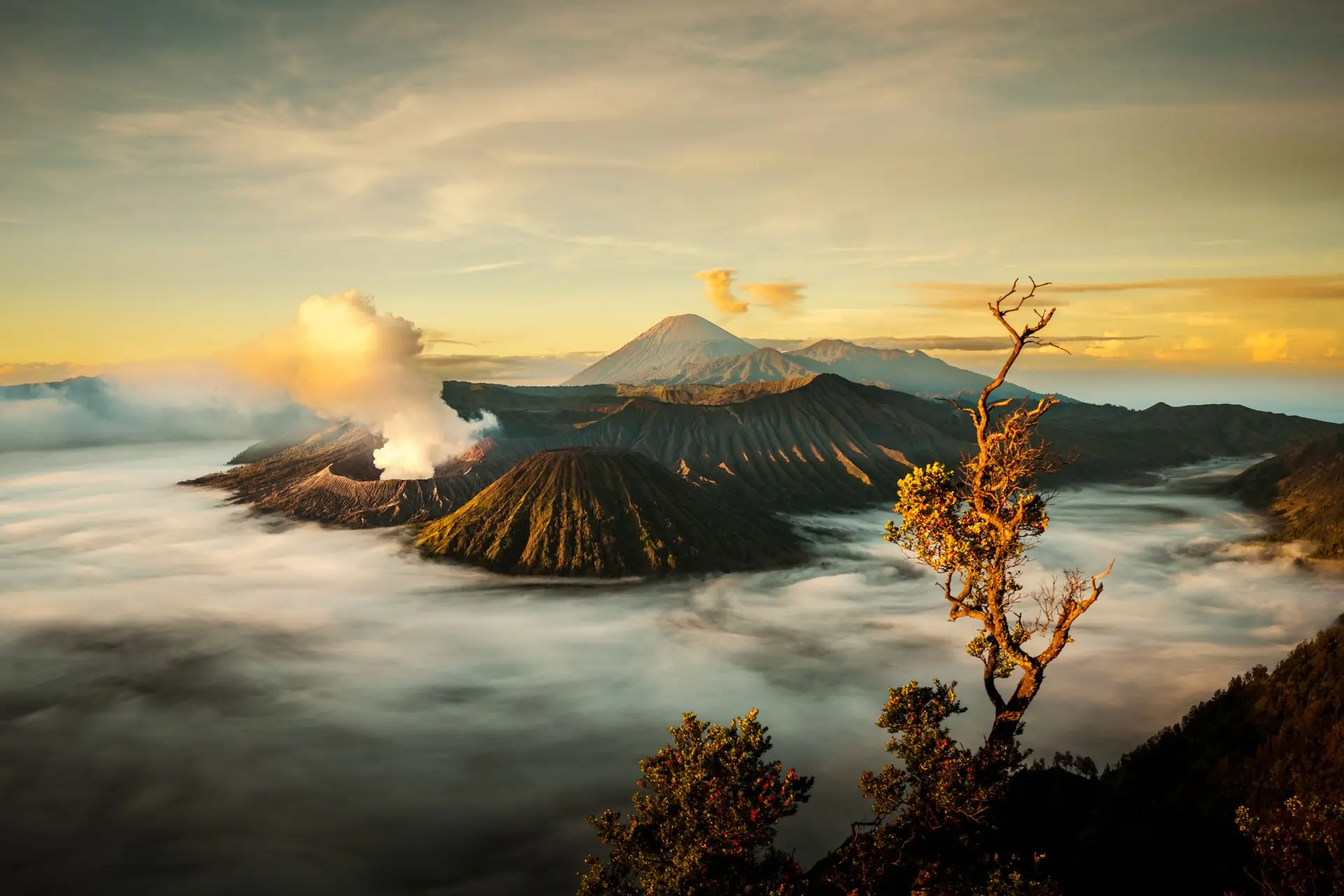
East Java's two most iconic volcanoes. Sunrise over Bromo above a sea of clouds, then Ijen's famous blue fire and turquoise crater lake.
A short history
Bromo is part of Bromo Tengger Semeru National Park and takes its name from Brahma, the Hindu creator god. The Tengger people are believed to descend from Majapahit nobles who withdrew to the mountains. Ijen is world-famous for its blue fire, burning sulphur gas, one of very few such phenomena on earth.
Culture
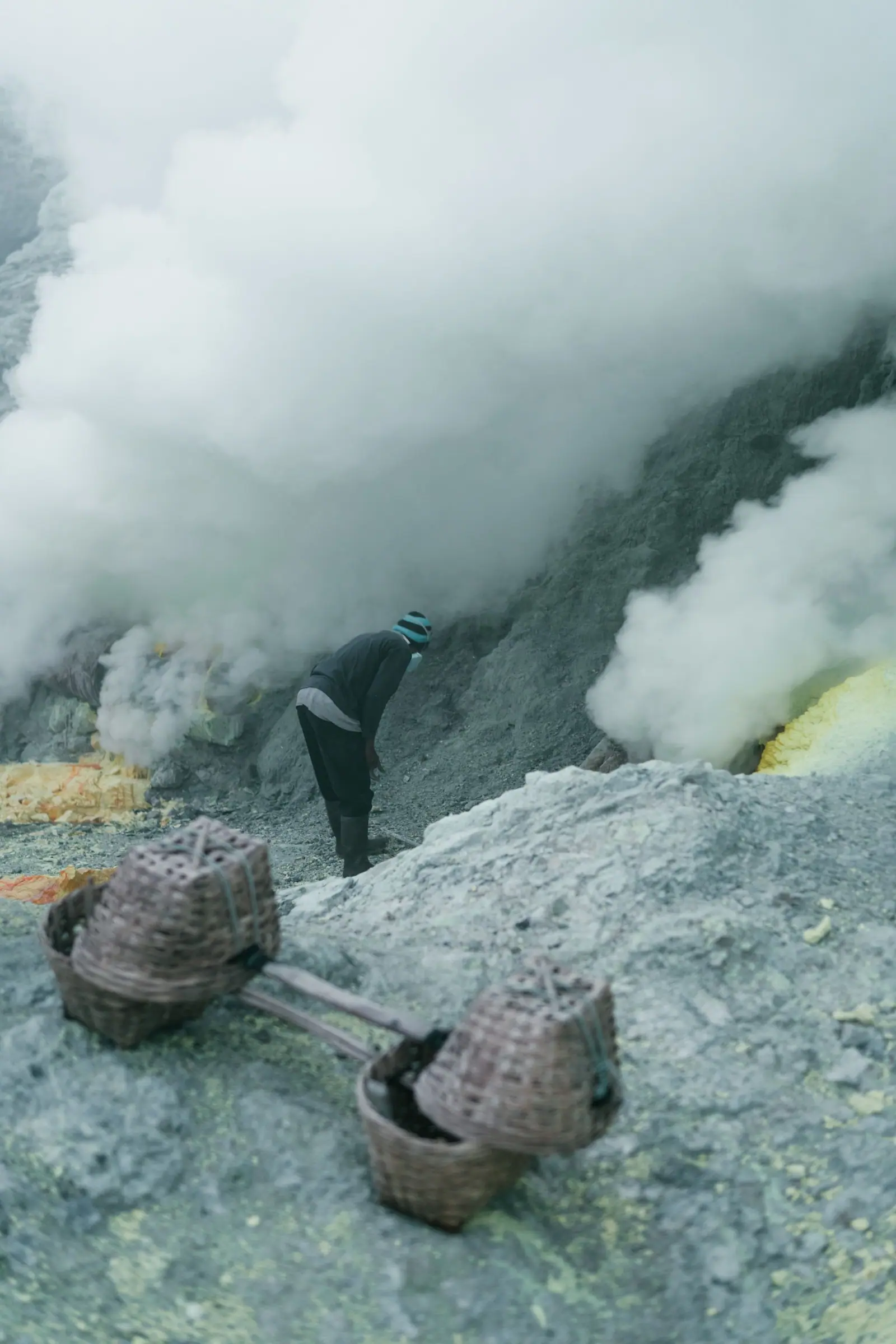
The Tengger people around Bromo keep ancient Hindu traditions and hold the Yadnya Kasada ceremony every year. At Ijen, traditional sulphur miners still carry loads out of the crater by hand.
Local etiquette & customs
Respect Tengger ceremonies such as Yadnya Kasada and never block the rituals. At Ijen, give way to sulphur miners carrying loads and do not photograph them at close range without permission.
Must-try food
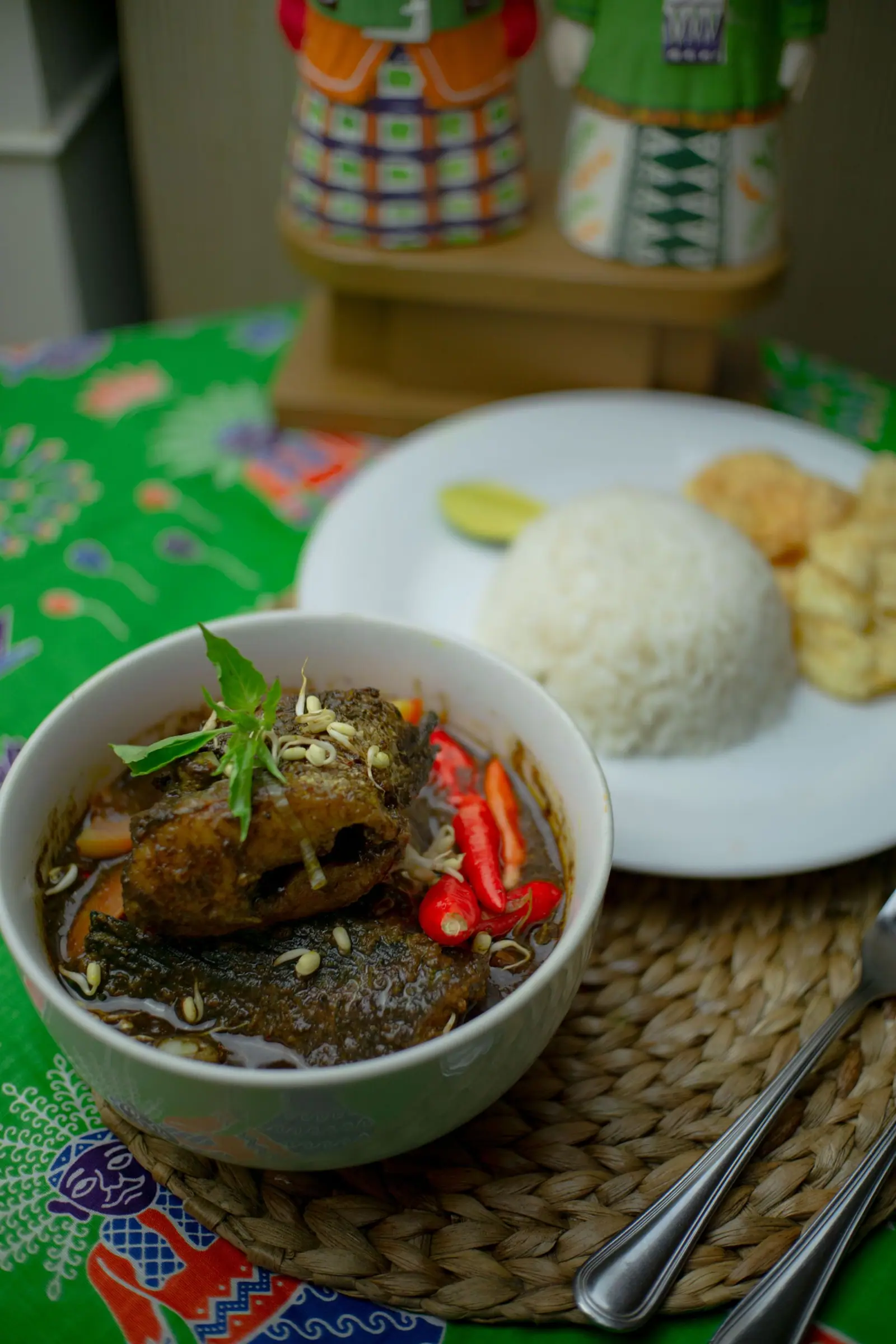
- Rawon — East Javanese beef soup darkened with keluak nuts.
- Nasi tempong — Rice with fiery Banyuwangi sambal.
- Rabbit satay — A mountain-area specialty.
- Tengger potatoes — Simple local potatoes, surprisingly delicious.
Things to do
 Sunrise at Penanjakan or Kingkong HillMount Bromo and its caldera
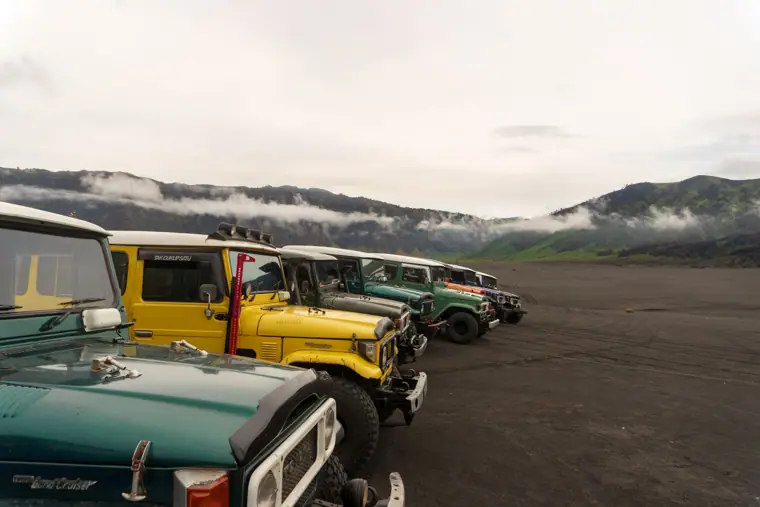 Cross the sea of sand by 4WD jeepJeeps lined up at Bromo
 See the blue fire at Ijen craterBlue fire of Ijen crater
 Ride a horse at the foot of BromoHorse riding on Bromo's sea of sand
 Take photos on the Teletubbies savannaGreen hills of the Tengger caldera
Best time to visit
April–October. Pre-dawn temperatures can drop below 10°C.
Our tips
- Bring a warm jacket, gloves and a torch.
- Gas masks are provided for Ijen.
- The Ijen hike is not advised for very young children or seniors with breathing issues.
For families & For companies
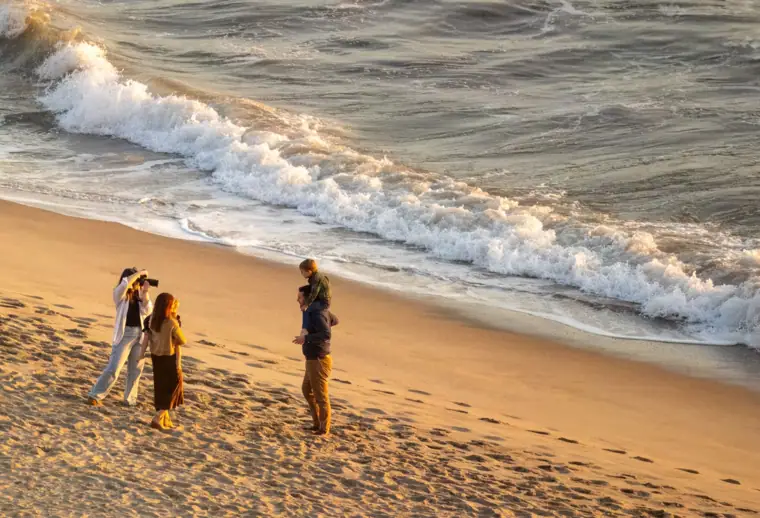
For families
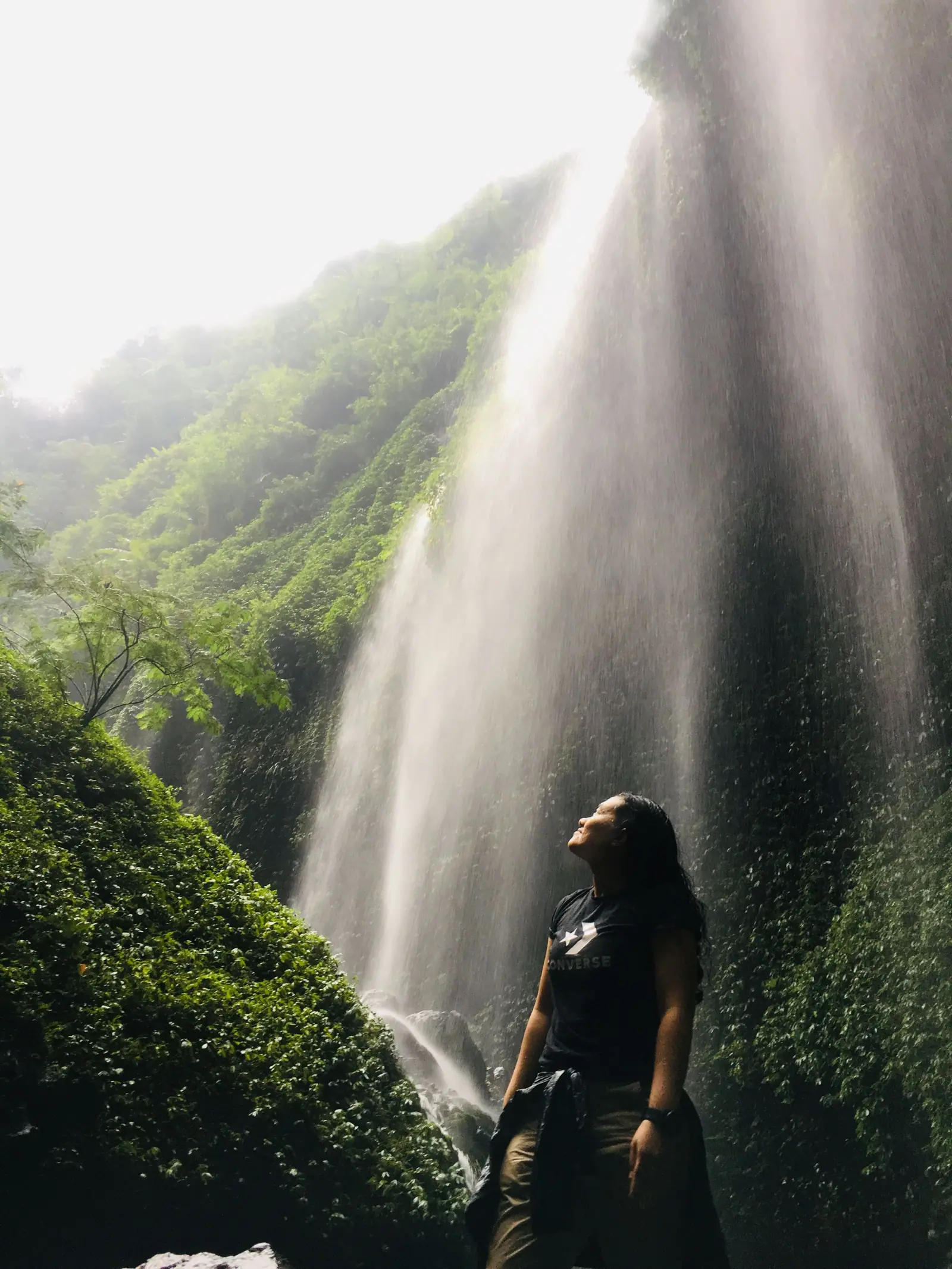
The family version can skip the pre-dawn Ijen hike for Madakaripura waterfall.

For companies
Jeep convoy for the team and group photos on the sea of sand.